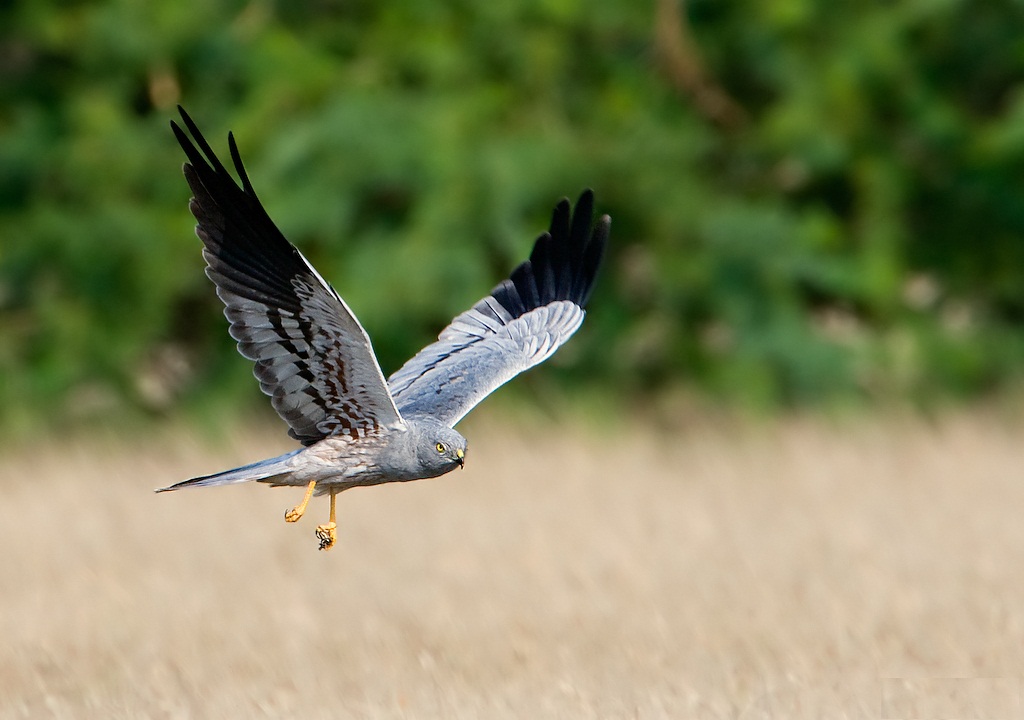
Britain's rarest breeding bird of prey has pulled off a second consecutive successful nesting season, and conservationists say the credit belongs largely to one male harrier who has effectively become the species' one-bird recovery program.
Montagu's harriers, sleek raptors the Royal Society for the Protection of Birds calls the "aristocrats of the bird world," nearly vanished from the UK entirely. The breeding population peaked at around 30 pairs in the mid-1950s, collapsed to zero by 1974, recovered modestly to about 13 pairs by the late 2000s, and then crashed again — no confirmed breeding pairs were recorded anywhere in the country between 2020 and 2023. The species was added to the UK's red list of birds of highest conservation concern in 2021.
One bird, six chicks, two nests
The turnaround traces largely to a single male, known to researchers only by his ring code, AU, who was tagged as a chick in a different region in 2016. Since 2018 he has fathered at least 16 chicks. This year alone he bred with two separate females in two different nests, producing six juveniles — behavior that has earned him the "polyamorous" label in the RSPB's own telling of his story, as CNN reported this week.
This is a sensitive species that is easily disturbed.
RSPB, on why AU's nest locations are kept secret
The RSPB has declined to disclose where the nests are, citing both the birds' sensitivity to disturbance and the private farmland the sites sit on — precautions meant to keep AU and his mates returning to the same ground in future seasons. This year, for the first time, conservationists fitted satellite tracking tags to one chick from each nest, giving researchers a way to follow the young birds' migration routes and survival odds once they leave Britain for the winter.
The species' near-extinction and slow recovery mirror the fate of several European farmland raptors squeezed by habitat loss and shifting agricultural practices over the past half-century. Whether AU's brood can rebuild a self-sustaining UK population depends on whether enough of his and other birds' offspring survive migration and return to breed themselves — a question the new satellite tags are designed to help answer over the next several seasons.