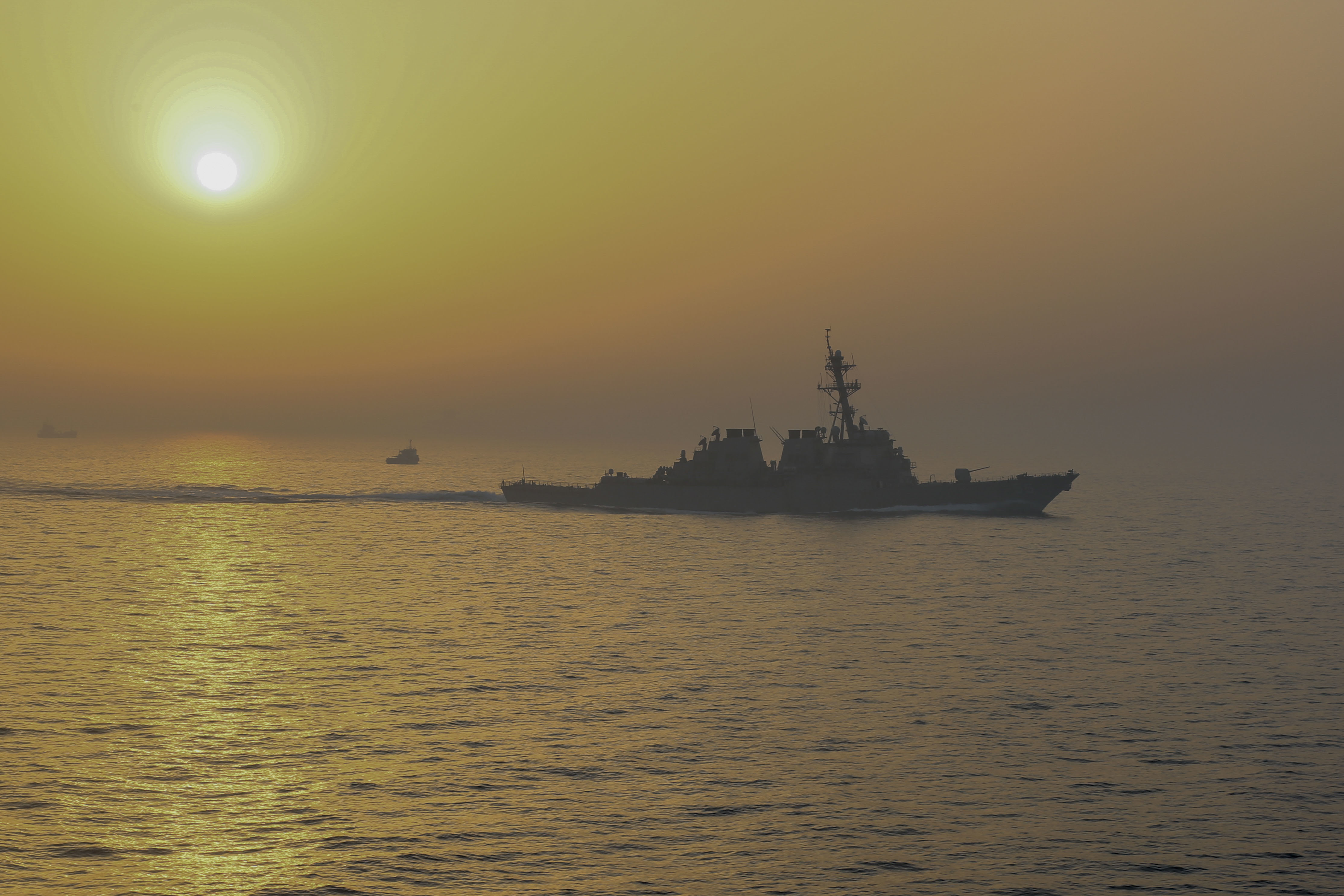
Iran widened its campaign against US military positions in the Gulf on Thursday, striking at a Kuwaiti air base that hosts American forces and at sites in Bahrain, a day after the United States bombed an Iranian radar installation on Qeshm Island. The exchange marked the sharpest escalation in a two-month lull in open hostilities between Washington and Tehran, and it drew swift condemnation from the Gulf Cooperation Council.
Kuwait's military said it activated air defenses and intercepted drones aimed at Ali Al-Salem Air Base, which hosts a rotating contingent of US forces, and reported no immediate damage. Bahrain's military said it intercepted "a number" of Iranian attacks on its own territory, though a senior US Navy official told reporters the Pentagon could not yet offer a full damage assessment because the kingdom remains what he called a "nonpermissive area" for battle-damage teams. Iran's military said its drones had targeted Patriot air-defense batteries and launch platforms at the Kuwaiti base, a claim neither Kuwait nor the United States has independently confirmed.
A diplomatic channel in collapse
The strikes followed a US bombing run on an Iranian radar site on Qeshm Island in the Strait of Hormuz, which American officials said was a response to an earlier Iranian strike on a radar installation in Bahrain. The back-and-forth has unfolded alongside reports of a tanker incident near Oman and fresh Houthi attacks inside Saudi Arabia, suggesting the conflict is no longer confined to direct exchanges between Washington and Tehran but is drawing in the wider Gulf shipping lanes that carry roughly 6 to 8 million barrels of crude a day.
The Gulf Cooperation Council's secretary-general held Iran "responsible for this escalation and its repercussions on regional security," according to a statement carried by NBC News' report from the region. Qatar's foreign ministry separately called the attacks "a dangerous escalation" that risks undermining diplomatic efforts that have, until this week, kept the conflict from spreading much beyond direct US-Iran exchanges. Iran's own claims about the scope and success of its strikes have not been independently verified, and the US has not yet formally responded to the latest round.
Washington weighs its next move
President Trump has said there is "an indication" Iran is pursuing biological weapons, a claim Tehran's foreign ministry spokesman dismissed as "fraudulent" in comments carried on Iranian state media and relayed by the Times of Israel's live coverage of the day's developments. Senate Republicans this week blocked a war-powers resolution that would have required congressional authorization for further strikes on Iran, leaving the administration with a freer hand than Democrats had sought.
The practical effect for Gulf shipping has been immediate: oil tankers transiting near Bahrain and Kuwait are operating under heightened risk advisories, and insurers have begun pricing in a larger premium for vessels moving through the Strait of Hormuz corridor. Energy markets, which had been gradually pricing in a de-escalation after the earlier lull, reversed course this week as the renewed strikes raised fresh doubts about how long Gulf producers can keep exports flowing uninterrupted.
For now, both sides appear to be calibrating rather than abandoning restraint entirely — Kuwait and Bahrain reported no casualties, and Iran's strikes targeted military infrastructure rather than population centers or oil terminals directly. But the GCC's unusually blunt language, and the US military's admission that it cannot yet assess damage in Bahrain, point to a crisis that regional diplomats say is now harder to contain than at any point since the attacks began.