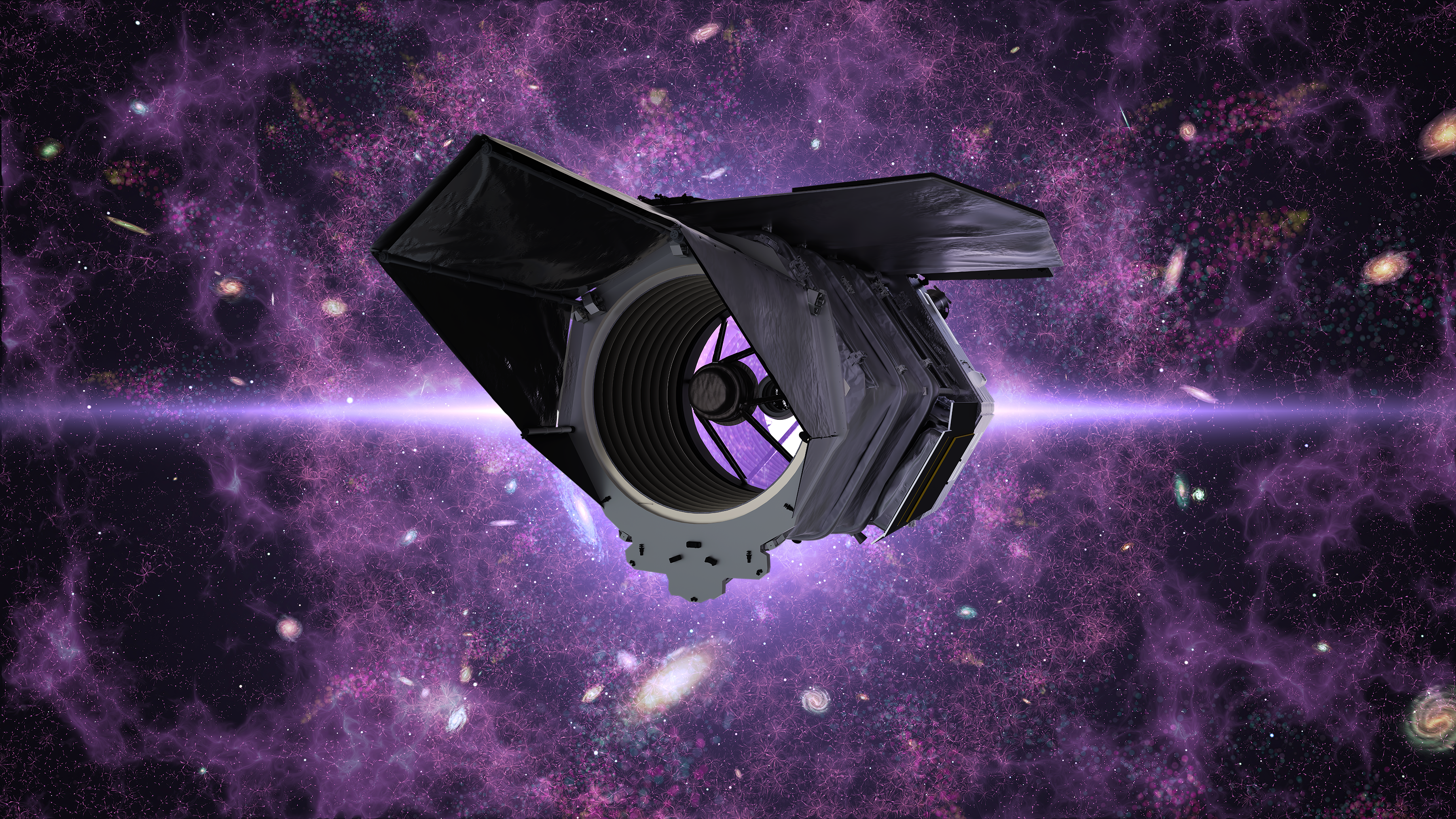
NASA and SpaceX certified the Nancy Grace Roman Space Telescope ready for final launch preparations after a flight readiness review held Aug. 21 at Kennedy Space Center in Florida, clearing the way for a targeted liftoff no earlier than 7:26 a.m. EDT on Sunday, Aug. 30. The observatory will fly atop a Falcon Heavy rocket from Launch Complex 39A, with a backup opportunity the following morning if weather or technical issues intervene.
Teams completed a full launch dress rehearsal on Aug. 20, and by Aug. 24 the telescope had been enclosed inside the Falcon Heavy's payload fairing in preparation for rollout to the pad. The mission is arriving roughly nine months ahead of its most recent official target of May 2027, a rare instance of a major NASA astrophysics mission running ahead of schedule. Coverage of the countdown is set to begin at 6 a.m. Sunday via NASA's launch broadcast.
A wide-angle view of the cosmos
Roman is built around a 2.4-meter mirror, the same aperture as the Hubble Space Telescope, but paired with a Wide Field Instrument carrying a 300-megapixel infrared camera. NASA says a single Roman exposure will capture roughly 100 times the sky area of a comparable Hubble image at similar resolution, letting astronomers survey large stretches of the sky for dark matter and dark energy signatures and search for thousands of exoplanets through gravitational microlensing. A separate coronagraph instrument aboard the spacecraft will test technology for directly imaging planets around nearby stars by blocking out the glare of their host suns.
The telescope is named for Nancy Grace Roman, NASA's first chief astronomer, who helped shepherd Hubble from concept to launch decades earlier. Roman's mission is designed to complement rather than replace Hubble and the James Webb Space Telescope, trading their narrower, deeper views for a wide-field survey capability that has never flown on a NASA flagship observatory before.
NASA has described the telescope as set to change the way astronomers see the universe and settle essential open questions in the field, including pinning down how the expansion of the universe has changed over billions of years, a measurement central to understanding dark energy. Independent astronomers have described the telescope's survey speed as a step change for the field, since it is expected to generate more data in its first year than prior wide-field missions collected over much longer periods.
Assuming a successful launch, Roman will spend about a month cruising to a gravitationally stable point roughly 1 million miles from Earth known as the Sun-Earth L2 Lagrange point, the same orbital neighborhood as Webb, before beginning months of instrument commissioning. Its primary mission is planned to run five years, with enough propellant on board to potentially extend operations for a decade or more.