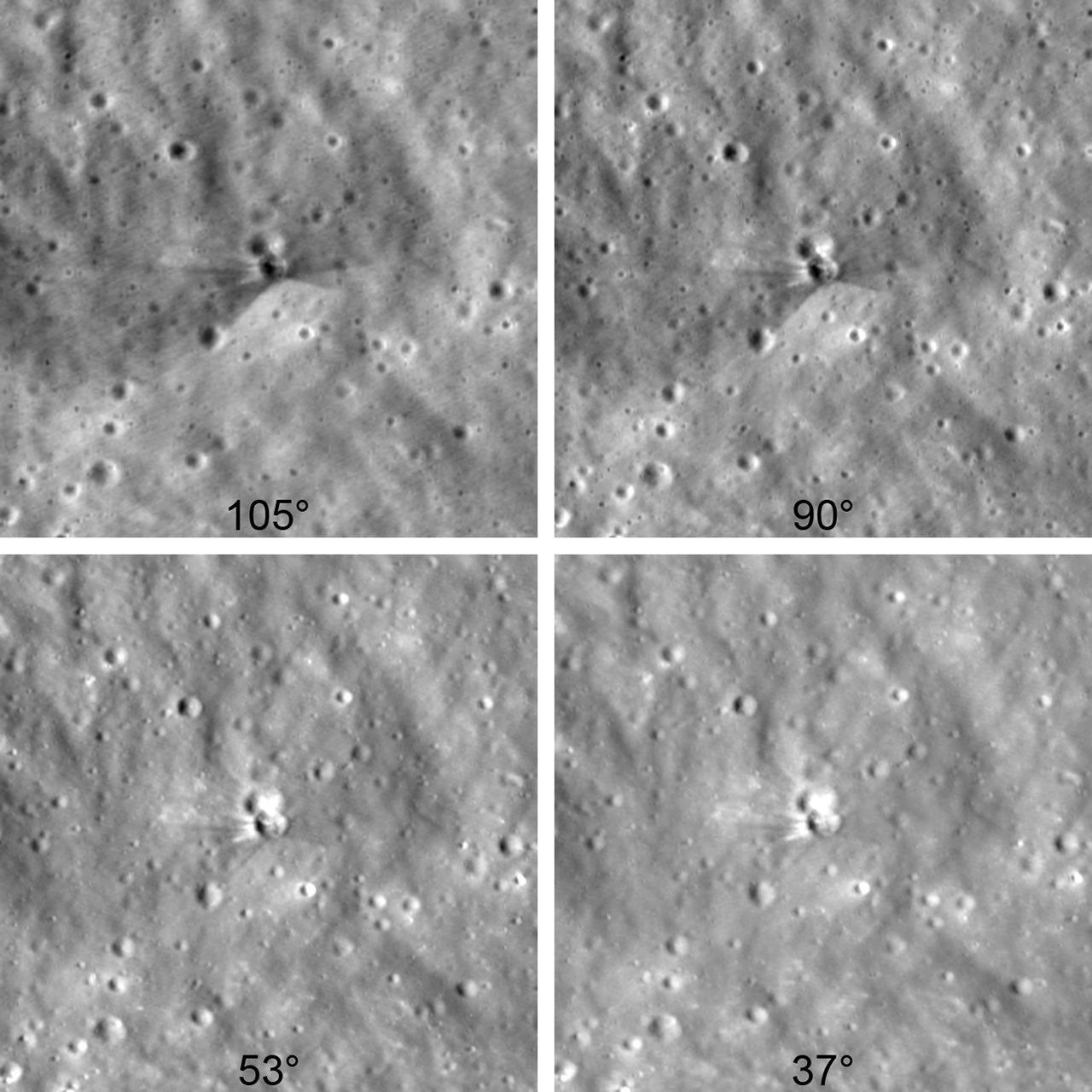
NASA's Lunar Reconnaissance Orbiter (LRO) has photographed a fresh crater carved into the moon by a spent SpaceX rocket stage, giving researchers an unusually well-documented look at how impacts reshape the lunar surface. The images, released this week by NASA's planetary science team, show a roughly 60-foot-wide pit surrounded by bright and dark rays of ejected material.
The crater formed on Aug. 5, when a Falcon 9 upper stage left over from SpaceX's January 2025 launch of the Firefly Blue Ghost 1 mission struck the moon near Einstein Crater at roughly 5,400 miles per hour. Between Aug. 11 and 12, LRO passed over the site on repeated orbits, tilting its cameras to keep the target in view each time it swept about 60 miles overhead. Scientists estimate the resulting crater is less than 10 feet deep, based on the length of its shadow, and identified darker rays of disturbed dust alongside brighter streaks of freshly exposed material thrown up from below the surface.
A rare "controlled" impact
Unlike the meteorites that regularly pepper the moon, this impact's timing, speed and approximate location were known in advance, calculated by NASA's Center for Near Earth Object Studies and refined using tracking data from South Korea's Danuri orbiter. That advance notice let the LRO team plan a targeted imaging campaign rather than search blindly for a new scar on the surface.
After the impact we might have a little bit more knowledge of where it is. We can do some additional targeting about a week after the impact and get some targeting over where the site is.
— Brent Garry, LRO project scientist, NASA Goddard Space Flight Center
Discarded rocket stages left in high, unstable orbits eventually drift into the moon's gravity well, and this is not the first to be tracked down deliberately — astronomers similarly monitored a suspected rocket-body impact in 2022. What sets this event apart is the precision: engineers know almost exactly when, where and how fast the stage hit, turning a routine piece of space debris into a natural experiment for testing models of how fast-moving objects excavate lunar soil.
Researchers plan to compare the crater's measurements against predictions from impact-cratering models, data that could sharpen estimates of how older, unexplained craters across the moon were formed. The Lunar Reconnaissance Orbiter Camera team at Arizona State University, which built and operates LRO's imaging instruments, is expected to keep monitoring the site as lighting conditions change in the coming lunar days, watching for how quickly the bright ejecta rays darken under solar wind and micrometeorite bombardment — a process that helps planetary scientists date the age of craters elsewhere on the moon.