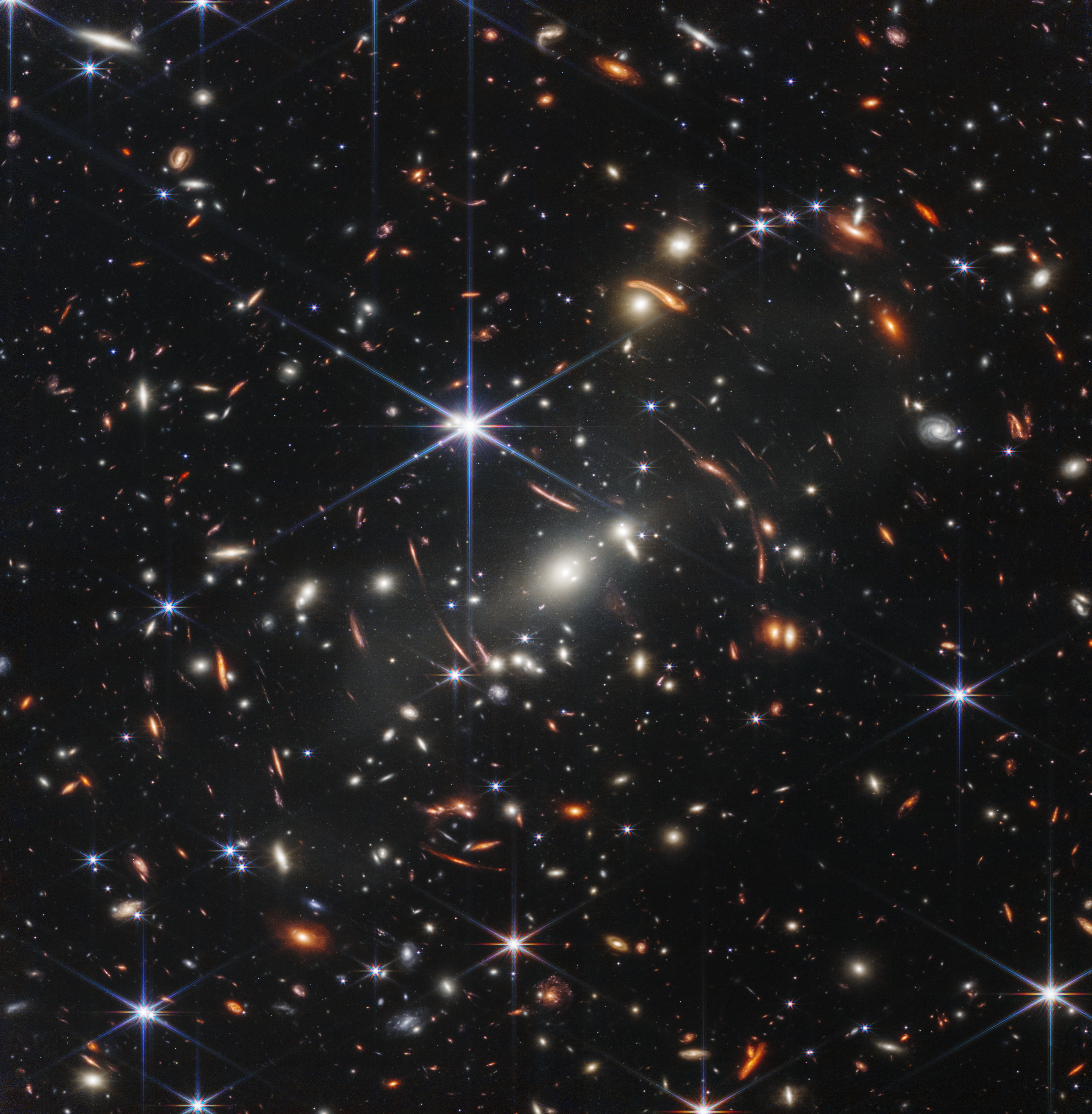
Astronomers using NASA's James Webb Space Telescope have found that some of the universe's earliest massive galaxies are hiding vast populations of faint, low-mass stars that earlier surveys could not detect — a discovery that could make certain galaxies from the dawn of the cosmos three to four times heavier than astronomers had calculated.
The study, led by Mariska Kriek of Leiden Observatory and first author Chloe Cheng, examined nine massive galaxies that had already stopped forming new stars billions of years ago. By combining ultra-deep Webb spectra with earlier ground-based data from the European Southern Observatory's Very Large Telescope, the team was able to measure, for the first time, the ratio of small, dim stars to large, bright ones inside galaxies this distant. The results were published this week in Nature Astronomy.
A skewed stellar population
The team found these ancient galaxies contain proportionally far more faint, low-mass stars than galaxies in the present-day universe, such as the Milky Way. Because small stars generate little light per unit of mass, previous mass estimates — based mainly on how bright a galaxy appears — dramatically undercounted the material actually locked up inside it. One galaxy that formed less than 1.5 billion years after the Big Bang came out as much as four times more massive once the hidden low-mass stars were accounted for.
They're different in the way that is really challenging to understand, because they are more massive than we expected — like a lot more massive, they have three or four times more mass than we expected.
Joel Leja, astronomer, Pennsylvania State University
Cheng, who recently completed her PhD at Leiden University partly on this research, compared the effect to how a city's skyline can be deceiving: the brightest towers grab attention, but they are not necessarily where most of the built mass sits. In these early galaxies, it is the countless dim, low-mass stars — not the rare bright ones — that account for most of the material.
Reopening an old puzzle
The finding sharpens a problem that has dogged astronomers since Webb began returning images of the early universe in 2022: some galaxies appeared to have grown too big, too fast, for standard models of galaxy formation after the Big Bang to easily explain. If early galaxies really are several times more massive than their brightness alone suggests, then the pace at which the first structures assembled themselves out of gas and dark matter looks even more extreme than previously thought.
Independent astronomers describe the measurement technique — teasing apart the relative numbers of small and large stars from spectral light alone — as a genuine technical advance rather than a modeling assumption, which is what gives the result its weight. The Leiden-led team says the next step is to apply the same spectroscopic method to a larger sample of early galaxies to see how widespread the effect is, and to test whether it also applies to galaxies that were still actively forming stars rather than the dormant ones studied here.