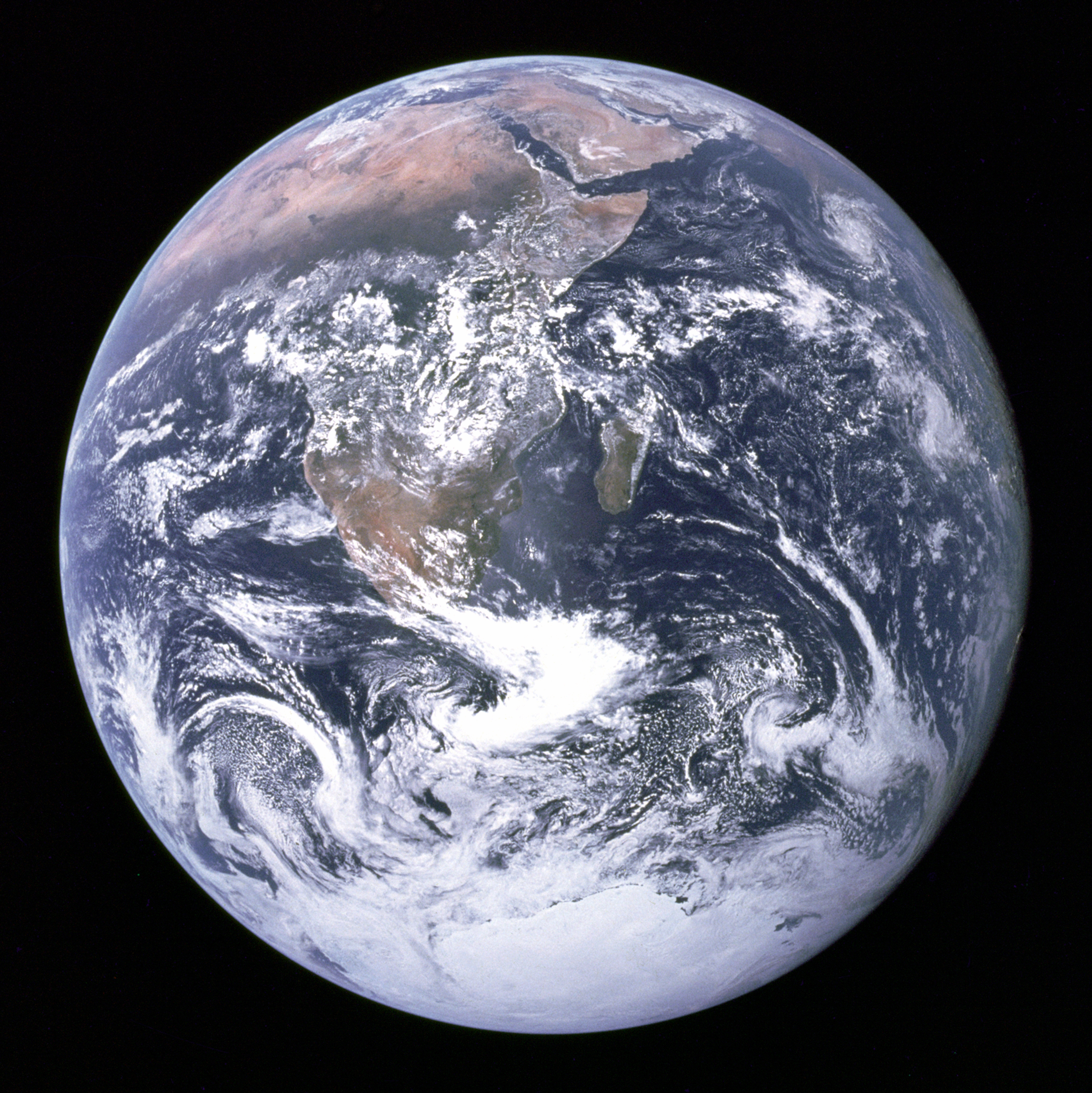
Earth appears to have formed almost entirely out of material that was already close to the young sun, according to a new isotopic analysis that challenges a decades-old assumption about how much of the planet's mass — and its water — arrived from the solar system's outer reaches.
In a study published in Nature Astronomy, planetary scientists Paolo Sossi and Dan Bower of ETH Zurich compared isotopic ratios across ten separate elemental systems in dozens of meteorites — including fragments chipped from Mars and the asteroid Vesta — against Earth's own isotopic fingerprint. They found that material from beyond Jupiter, the water-rich "carbonaceous" meteorites long thought to have supplied a sizable share of Earth's raw material, likely contributed less than 2% of the planet's mass. It may have contributed essentially nothing at all.
Rewriting the recipe
That is a sharp break from the standing model, which held that carbonaceous, outer-solar-system material made up somewhere between 6% and 40% of Earth's building blocks. Sossi and Bower instead found Earth's isotopic composition sits squarely with the "non-carbonaceous" meteorites that formed exclusively in the inner solar system, alongside Mars and Vesta, with no statistical evidence of mixing between the two reservoirs during the planet's accretion.
We were truly astonished to find that the Earth is composed entirely of material from the inner Solar System.
Dan Bower, planetary scientist, ETH Zurich
Sossi described the result more simply: the building material of Earth, he said, traces back to "a single material reservoir" rather than a blend of near and far sources. The pair applied statistical data-science techniques that are still uncommon in geochemistry to squeeze a clearer signal out of decades of published meteorite measurements.
A new water mystery
The finding creates its own puzzle. If so little water-bearing material arrived from beyond Jupiter, scientists now have to explain how a hot, dry inner solar system nonetheless delivered enough water to fill Earth's oceans — a question the authors say their data cannot yet resolve. They note the debate over Earth's precise building blocks remains active in the planetary science community, and that a firmer test of their model — comparing it against actual rock samples from Mercury and Venus — isn't possible with current technology, since no spacecraft has yet returned material from either planet.
For now, the study adds fresh urgency to sample-return proposals aimed at Venus and Mercury, and to ongoing work using existing asteroid sample-return missions to refine the isotopic map of the early solar system.