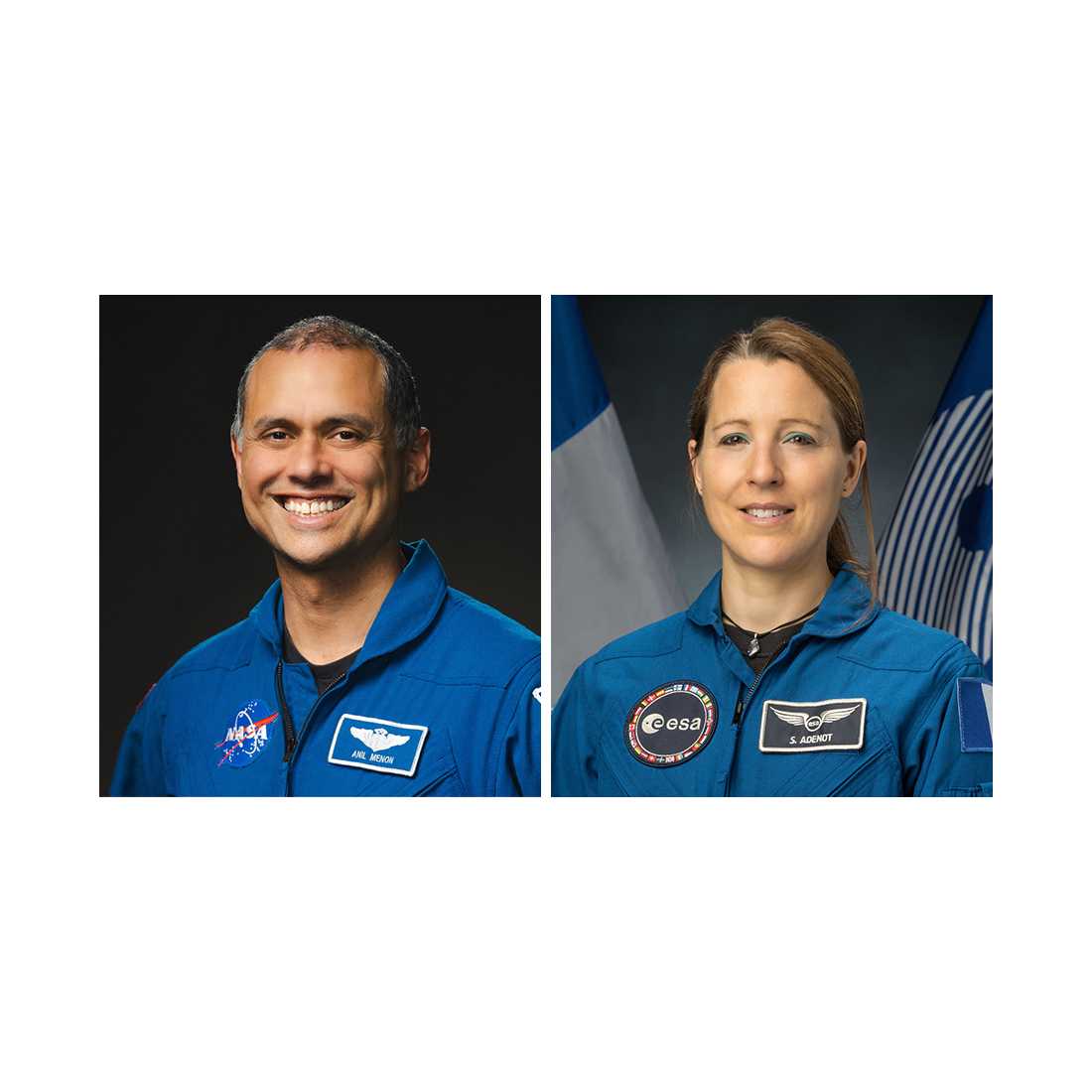
NASA astronaut Anil Menon and ESA astronaut Sophie Adenot are stepping outside the International Space Station this morning for a six-and-a-half-hour spacewalk to replace a failing communications antenna — a routine repair job with an unusual footnote: if it goes as planned, Adenot will become the first Frenchwoman to walk in space.
The pair exited the station's Quest airlock at roughly 8:35 a.m. ET, in what NASA is designating U.S. Spacewalk 97, the second of three EVAs planned at the station this month. Their job is to remove an aging Space-to-Ground antenna from the station's Z1 truss and install a spare, restoring a high-speed data link that lets Mission Control in Houston exchange large volumes of information with the orbiting complex. Menon, riding the Canadarm2 robotic arm, and Adenot, tethered to the station's exterior, will make the electrical and data connections needed to bring the new antenna online. Inside, flight engineer Jack Hathaway and station commander Jessica Meir are operating the arm and monitoring the spacewalkers.
A first for France
For Menon, it is a second trip outside the station, following an EVA on Aug. 6 with Meir. For Adenot, who arrived at the ISS in February as part of Expedition 75 and became France's second woman in space after Claudie Haigneré, today is a first — and a milestone she has been anticipating publicly for days.
"I've got great news: on 18 August it'll be my turn to leave the Station."
Sophie Adenot, ESA astronaut, via social media
If successful, Adenot becomes only the second European woman ever to conduct a spacewalk, after Italy's Samantha Cristoforetti in 2022, according to Euronews. NASA is streaming the spacewalk live on NASA+, YouTube and other platforms, with ESA carrying its own coverage on ESA Web TV.
Tuesday's excursion is the middle leg of a three-spacewalk stretch NASA has scheduled at the station this month to keep pace with a growing list of maintenance tasks, including a third EVA already provisionally set for Aug. 25. Communications antennas degrade gradually from years of thermal cycling and micrometeorite exposure, and swapping them out before they fail is a routine part of station upkeep, though NASA has not said how long the outgoing antenna had been in service.